November Rain

November rain poured for hours
Hiding the city as it pelted down
The water gushed down the streets
As clouds swarmed the sky hiding the sun

The noisy, bustling city came to a halt
Staying in seem to be the best idea
Rain poured down on the flowers and trees
And they knelt down, smitten by the thunderstorm

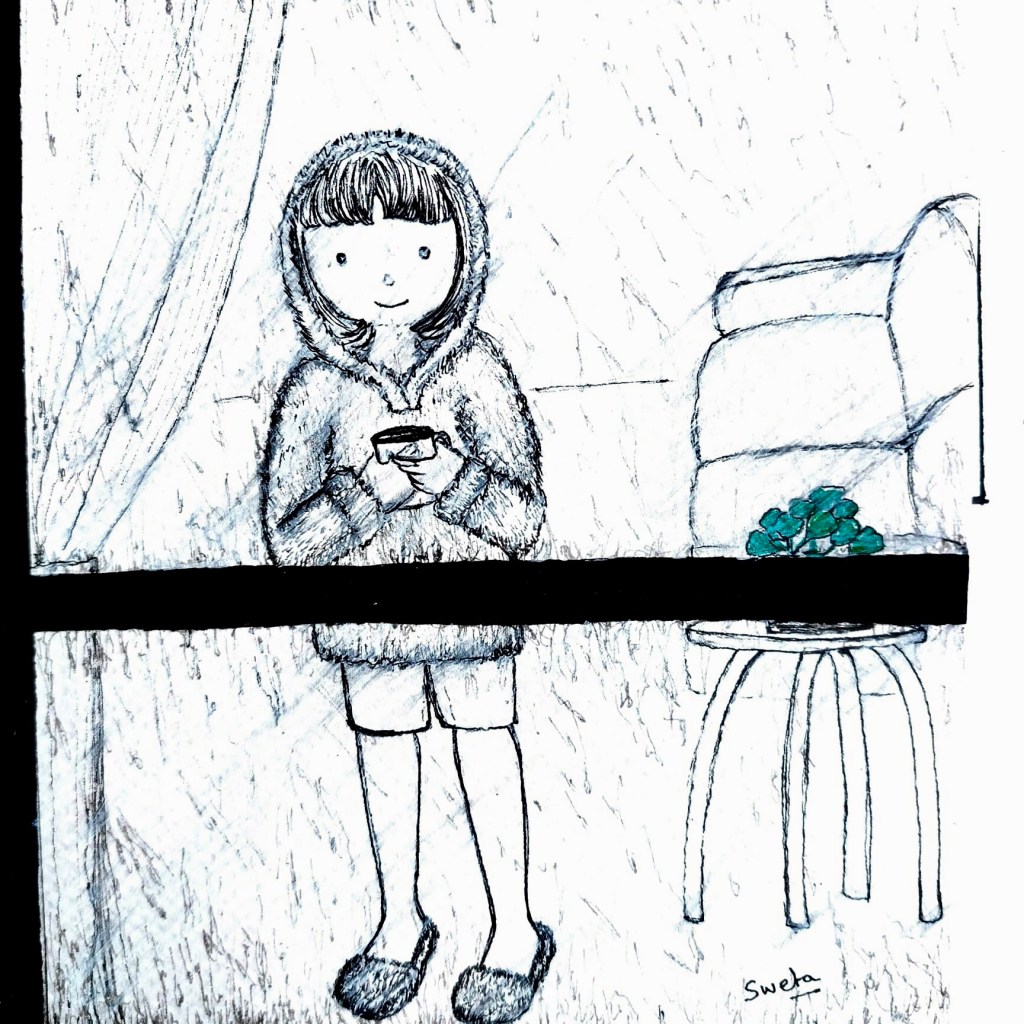
The raindrops slid over the window.
Clinging to the warmth of my coffee cup, I watched.
As the November rain poured all day
Bringing everything to a calming halt.

A Guide To The Circular Economy

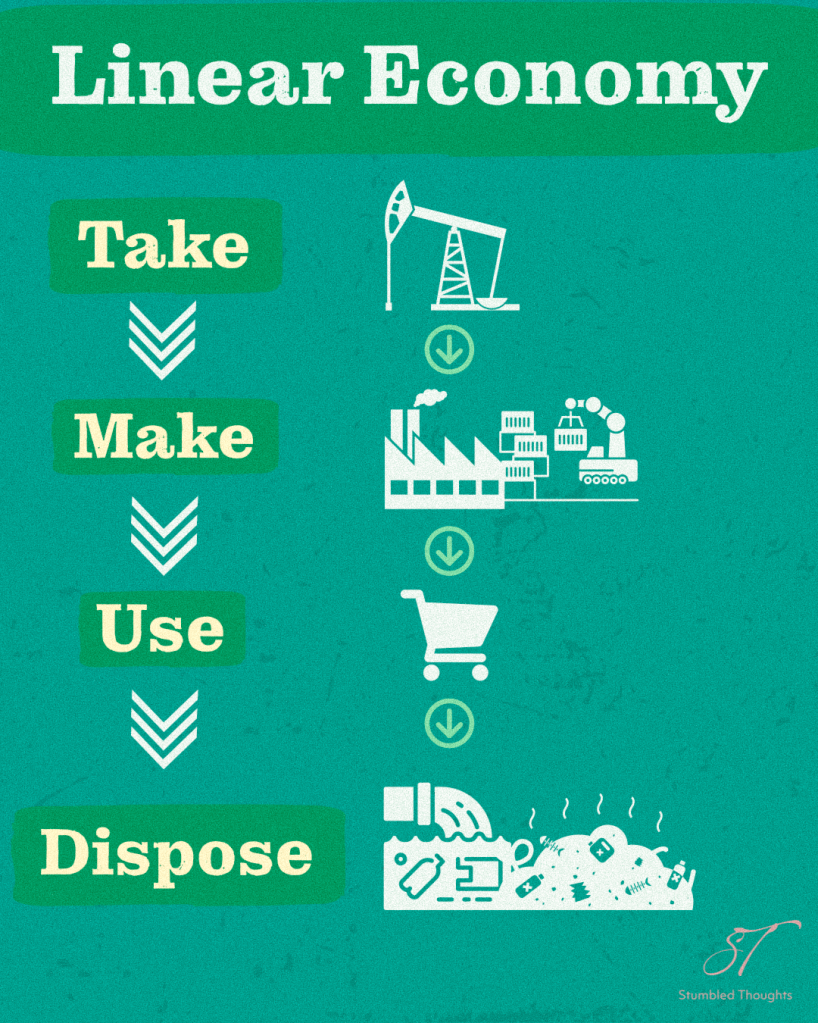
Since the industrial revolution, we have been using the linear economy model where we “take-make-use-dispose”. In other words, a linear economy takes raw natural resources, transforms them into products and then these products are disposed of after just a few uses.

This system has been creating billions of tonnes of waste across the world. However, a lot of this waste can be easily reused, shared, repaired or recycled. That’s what the idea of a circular economy entails.

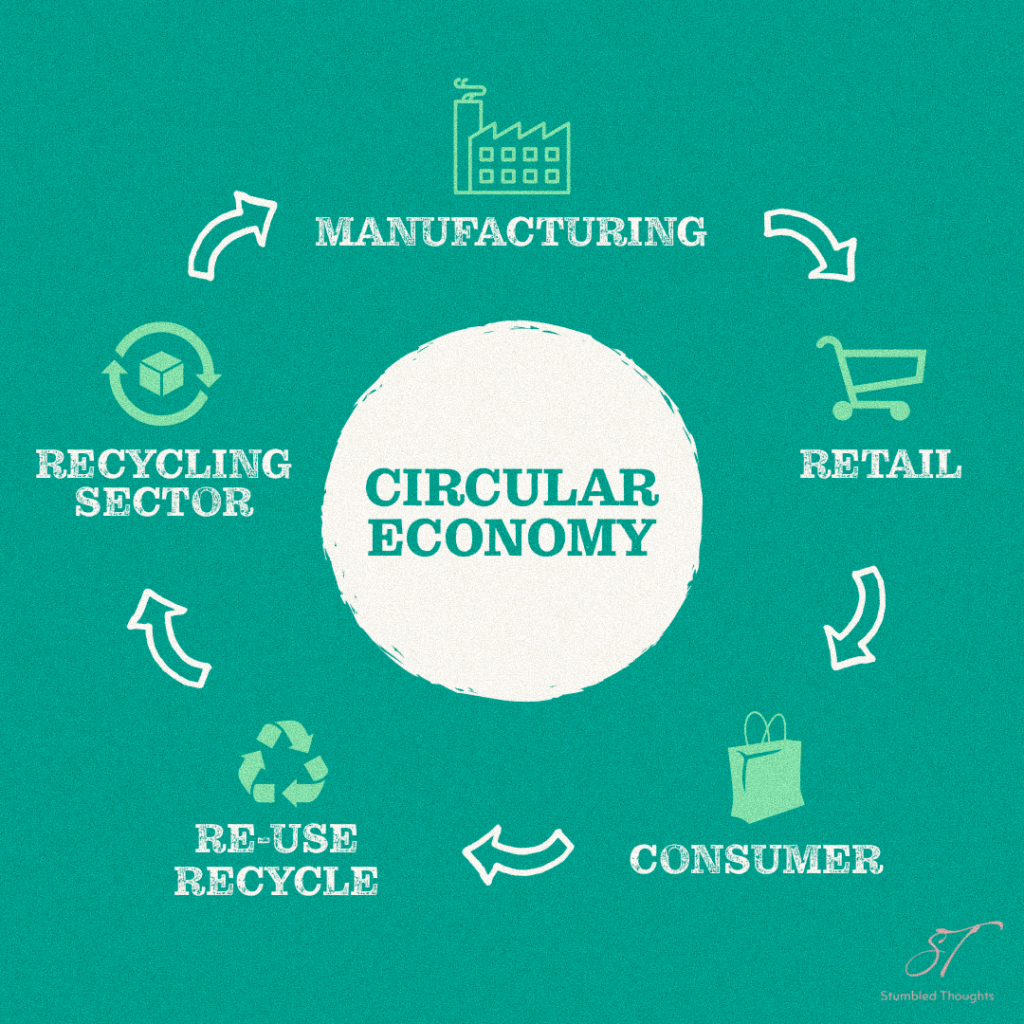
The circular economy is a concept of production and consumption which involves sharing, reusing, recycling and repairing. This model intends to make products last longer by extending their life for as long as possible, reducing the waste to a minimum.

The whole vision of the circular economy is to minimise the use of natural resources to produce and maximise recycling and reusing. The circular economy model combines old strategies like reusing, reducing and recycling with new methods like renting things instead of owning. The idea of this model is not to end growth but to change our ways and blend our development with nature.

The circular economy is based on three aspects :

Minimal Waste & Pollution

In a circular economy, waste should not exist. Products are designed for reuse and can be disassembled. A vital component of a circular economy is to treat energy and resources as valuable and finite—single or limited uses of products to be eliminated. Waste is considered a design flaw. Introducing a “re-thinking” concept will help us explore new technologies, designs, and perspectives to make products last longer through refurbishment and reuse instead of throwing them away. It also means reducing recycling and disposal, which uses both energy and labour. An excellent example of a ‘re-thinking’ design concept is Gerrard Street , a company providing subscription-based services for its headphones. Their product can easily be repaired and disassembled with around 85% of the components that can be reused.

Regenerating Natural EcoSystem

Circular economy distinguishes between technical and biological cycles. Organic based materials are used in a way that can later be used to enhance our natural resources. In a circular economy, we take the example of nature which uses everything and wastes nothing. Organic or plant-based wastes can be used as fertilisers to enhance soil nutrients or regenerate the oceans that provide our renewable resources for the economy. Companies like Connect the Dots and The Balbo group are already working on regenerative agriculture and working with farmers to improve soil health and promote biodiversity.

Renewable Energy & Resources

Renewable energy can replace fossil fuels in a circular economy. At the same time, rental services and sharing businesses will serve more people with fewer products. Using less and decreasing our dependence on resources is one of the principles of this economy. The goal is to preserve finite natural raw materials by restricting their extraction and balancing the flow of renewable resources. The more we increase the extraction of resources, the more will be the consumption of energy, which will eventually increase the production of carbon emissions. Therefore in a circular economy, more thoughtful use of these resources is aimed to minimise carbon emissions. Iberdrola, a Spanish multinational company, generates, distributes, and trades clean energy. This clean energy is generated using wind, mini-hydro, solar thermal, photovoltaic, and biomass, making Iberdrola a good example of a circular economy.

Benefits of Circular Economy

Moving towards a circular economy will positively affect our planet’s ecosystem by reducing greenhouse gas emissions and preserving our natural resources. There will be no or minimal wastage. Renewable energy and resources will reduce our dependence on raw natural resources, providing energy-efficient and non-toxic products.

Using organic waste to regenerate our ecosystem will result in healthier soil and ecosystem. It will also prevent soil degradation.

Reusing and an efficient eco-design will also help companies reduce their costs and total annual greenhouse gas emissions. 

A circular economy will help in reducing pressure on our environment. It will balance our ecosystem and economy, preserve our natural resources while leading to innovations and eventually to a better quality of life.

Sustainable Future Of Coffee Sector

Coffee is one of the most popular beverages, with its demand continuing to rise globally. USDA estimated that total production of coffee will reach 175.8 million bags by December 2020/21.

It takes around 4 to 7 years for a coffee tree to produce its first harvest, which bears fruits for 25 years. Currently, more than 50 countries around the world produce coffee, creating jobs for many.

Coffee grows only in the latitudes between the Tropic of Capricorn and the Tropic of Cancer. This area provides the perfect environment required for producing coffee beans and is referred to as the “bean belt”.

However, it is expected that by 2050, 50% of the land suitable for producing Arabica coffee beans will be unproductive because of climate change, deforestation and other factors like pests and fungal pathogens. 

Currently, coffee farming provides livelihood to around 60 million people across the world therefore, finding a sustainable solution is the need of the hour. 

The critical sustainability issues that the coffee sector is facing right now are:

• working conditions of coffee producing farmers,

• wages earned by the farmers, and

• climate change.

While more efforts are made towards achieving a more sustainable coffee sector by international certifying bodies, a lot more is still needed to be done. While many consumers are ready to pay more for coffee, farmers receive only a tiny fraction of it. Also, climate change is affecting the harvest, making this crisis worse for both coffee producers and farmers. And while we enjoy our cup of coffee for a few dollars, the farmers hardly earn a few cents on each cup. Low prices and changing climate is pushing many of these farmers and producers below the poverty line.

Some efforts we, as end consumers, can make to achieve a sustainable future for coffee:

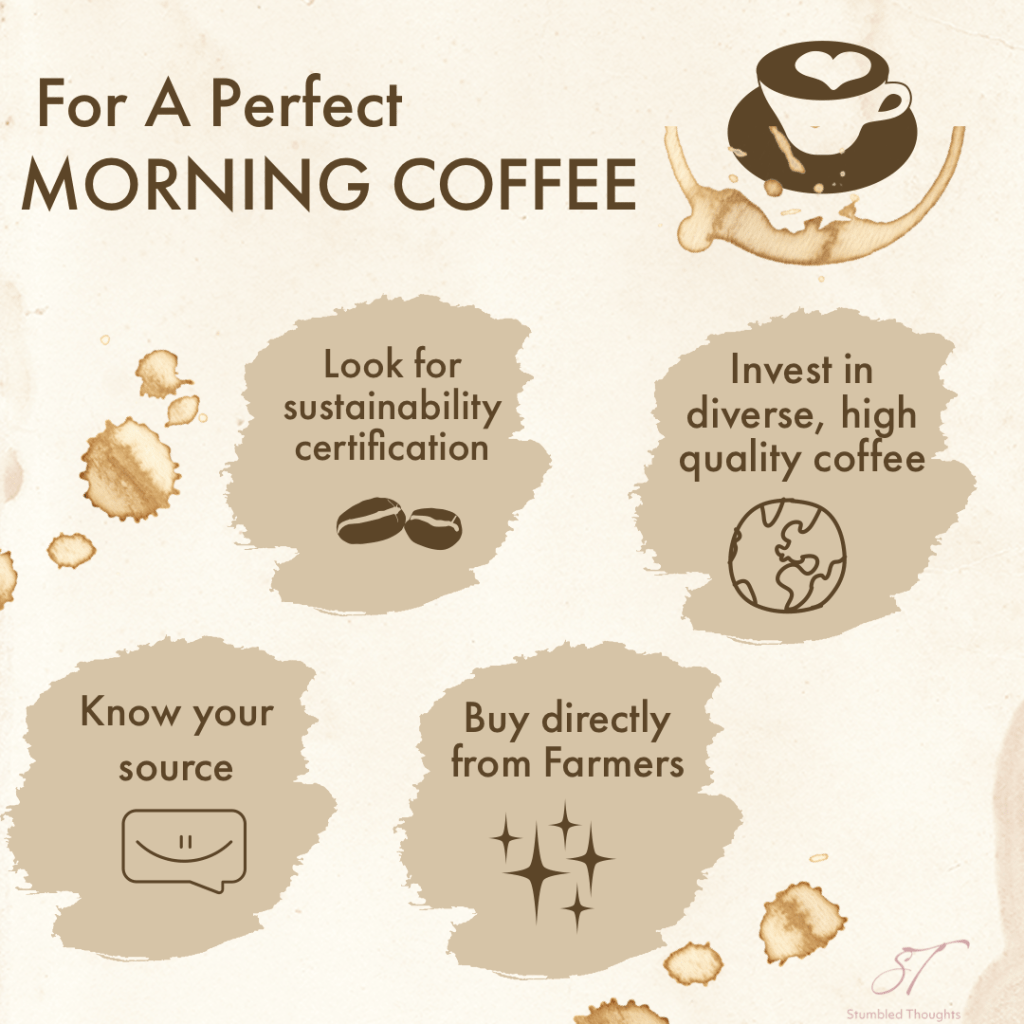
  • Buying coffee with international sustainability certification
  • Research about the brand before buying speciality coffee. What the company is doing to ensure the well being of its suppliers and farmers or how the brand is addressing social, economic and environmental factors, determines how sustainable their coffee is.
  • Purchase the high quality and diverse coffee to promote demand for these high-quality coffee grown by women and smaller farmers.

Emerging Technologies For Sustainable Coffee Sector

Direct Sale to Consumers 

With the help of the internet and online marketplaces, selling directly to consumers can help small producers to promote their brands more easily. It decreases the cost and provides these brands with a narrative of who they are and why consumers should buy from them. Having a story will help these small brands to stand out in a highly competitive online market. Therefore, apart from online marketing, offline sources of marketing, logistics etc., also need to be made more accessible for these small producers to promote and sell their coffee without having to shell out too much money on marketing while still reaching out to consumers. 

Using Blockchain Technology

What is Blockchain?

Blockchain is a system of recording information that makes it very difficult to change or hack the system for anyone. The data is collected together in a group of blocks.

This set of information creates a digital ledger of transactions which is then duplicated and distributed across the entire network of computer systems on the blockchain. 

Sustainable Coffee and Blockchain

Using blockchain, we can simplify tracking information, transactions and payments by creating a permanent and digital chain of transactions that cannot be altered. Every individual or group of individuals involved in the chain can easily access information. Any data added in the blockchain is shared in the blockchain network depending on their level of permission. This will make it easier for effective interaction between farmers, producers, wholesalers, retailers and anyone involved in the supply chain. Companies like Farmer Connect and VeChain are already creating a reliable blockchain ecosystem for small businesses and farmers.

Knowing where our favourite morning cup of coffee is coming from, who is growing them and how it affects the planet can help us ensure a sustainable future for everyone involved in the coffee sector, including the end consumers.

Sustainability- Planet, People & Prosperity

Sustainability is becoming a popular topic lately. It is gaining more recognition now since it is becoming evident that unless we adapt to more sustainable living, we cannot preserve our resources and quality of life for our generation and future generations.

What is Sustainability?

Sustainability is an integrated approach where a balance is maintained between economic growth, social equity and the environment. The United Nations Brundtland Commission defines sustainability as “meeting the needs of the present without compromising the ability of future generations to meet their own needs.”

Today many countries are still in the stage of development. Therefore, ensuring that their needs are met and their development process does not negatively impact future generations, is essential.

In 2015 United Nations member states adopted the 2030 agenda for Sustainable Development. This ‘agenda’ provides a blueprint for achieving peace and prosperity for the people and our planet. 

With each year our planet getting warmer and natural disasters becoming more common, the need for a plan of action is becoming significant. While at the same time, we also need a strategy to achieve economic growth, end poverty, improve health and education and reduce inequality.

Environment, economy and society are the three components of sustainable development. It is all about using our resources wisely and conservatively, emphasising the long term impacts of the ways we use our resources now. 

The question is how we can contribute and do our part as an individual, group or company? With our world extensive and diverse, how can we adapt it to a more local or individual context?

While I was researching how we can integrate sustainability in our life, work and community, I came across the United Nations 17 goals of the United Nations Sustainable Development Agenda. These global goals focus on the aspects that need our immediate attention to achieve sustainable growth. These goals are:

  1. Eliminate poverty
  2. End hunger, achieve food security and improved nutrition and promote sustainable agriculture.
  3. Health and well-being
  4. Clean water and sanitation
  5. Ensuring inclusive and quality education and promoting lifelong learning opportunities for all
  6. Gender equality
  7. Access to affordable and clean energy for everyone.
  8. Promoting sustainable economic growth, full and productive employment and decent work for all.
  9. Building resilient infrastructure, promoting inclusive and sustainable industrialisation and fostering innovation.
  10. Reduce inequality within and among countries.
  11. Sustainable cities and communities.
  12. Responsible consumption and production.
  13. Climate action.
  14. Conserve and sustainably use the oceans, seas and marine resources for sustainable development.
  15. Protect, restore and promote sustainable use of terrestrial ecosystems, sustainably manage forests, combat desertification, and halt and reverse land degradation and halt biodiversity loss.
  16. Promote peaceful and inclusive societies for sustainable development.
  17. Strengthen the means of implementation and revitalise the global partnership for sustainable development.

You can read about these goals in detail here

Why Do We Need To Adapt Sustainability?

The question, however, should be, why not? Sustainability has diversity of benefits that focuses on maintaining an ecological balance and ensuring that we achieve social and economic development. We cannot keep our quality of life, the diversity of life on Earth or our ecosystems unless we embrace sustainability. We need to realise that our resources are finite, and living sustainably is not something we ‘should’ do but something we ‘must’ do to conserve and protect all lives. Every small step counts, whether making wiser purchase decisions, growing our own food or simply reducing waste by reusing and recycling.

Just remember small steps can make bigger differences!

The Moon

The moon shining in all its glory tonight

Like a silver coin gleaming in the dark sky

And there comes the gentle cool breeze,

Bringing along cotton candy shaped clouds with it.

The clouds appear frolicsome today,

Playing peekaboo with the moon every now and then.

And there I sat on my bay window,

Admiring this whimsical sight from my little nook.

The cool breeze brushed through my face and tousled my hairs.

Stirring the poetic feelings that seemed familiar.

Left enchanted, I just stayed there

Admiring the whimsical sight for the rest of my night.

Free Yourself- Mind, Body & Soul

When your whole existence seems invalid

When your world seems to be shattered.

When everything look dark and hopeless

And your whole life is upside down.

You question your every thought and decision

And wonder if everything you do is flawed.

It seems easy to give up

It is easy to give up!

Should you live with the pain

Should you let it go

Free yourself: mind, body and soul?

Or fight back?

Live your life without regrets.

A life with no emotional baggage.

Take the risk and leave it all behind

Let it go to find yourself

Free yourself: mind, body and soul.

A New World- Chapter 6

stumbled thoughts's avatarStumbled Thoughts

I never knew that anything can be so soothing and calming for the soul. The denser the forest was getting the more tranquility it was giving to me. After the rains it looked lusciously green with the sweet petrichor around. I had never seen a place so beautiful. It looked like some fairy world to me.

Chotu was faster than me obviously also he knew everything about the ‘Jungles’. He knew where we can get the best view, where we can take rest and also where we should not go. He knew each and every path and where it will lead us to.
“Madam Ji you know there are ruins of an old temple in these forests. Nobody knows who built it. But I sometimes go and sit there. It also have a river next to it. Very beautiful it is. It is my favourite place.”
“Oh really? Doesn’t it…

View original post 243 more words

A New World- Chapter 6

I never knew that anything can be so soothing and calming for the soul. The denser the forest was getting the more tranquility it was giving to me. After the rains it looked lusciously green with the sweet petrichor around. I had never seen a place so beautiful. It looked like some fairy world to me.

Chotu was faster than me obviously also he knew everything about the ‘Jungles’. He knew where we can get the best view, where we can take rest and also where we should not go. He knew each and every path and where it will lead us to.
“Madam Ji you know there are ruins of an old temple in these forests. Nobody knows who built it. But I sometimes go and sit there. It also have a river next to it. Very beautiful it is. It is my favourite place.”
“Oh really? Doesn’t it scare you coming and sitting there all alone.”
“No Madamji going there does not scare me. I have been there a lot of times. Whenever I feel lonely and miss my family I just come here.”
“What about the wild animals? what about the leopards? If it is next to the river. you must have seen a lot of animals there”
“Yes Madam ji. I once had an encounter with a leopard too!” he exclaimed. I could see the excitement in his eyes as he narrated the whole event.
” Madam ji he was right there on the other side of the river. I looked at him in his eyes but it did not scare me. He was just thirsty so he drank water and left. I stood still there for almost thirty minutes after it left. I thought it will attack me but it did not. I really respect him a lot now Madam ji.”
“You are really brave. Even after that incident you went back to this place.”
“Yes Madam ji but please do not tell about all this to Manager Saab. He will scold me for it.”
I looked at his face and could see how much those ruins meant to him. “Okay I will not. But you will have to show me that place too. I am now very much eager to go there.”
“Yes! I will!” He looked more than happy to show me that place.
– Sweta