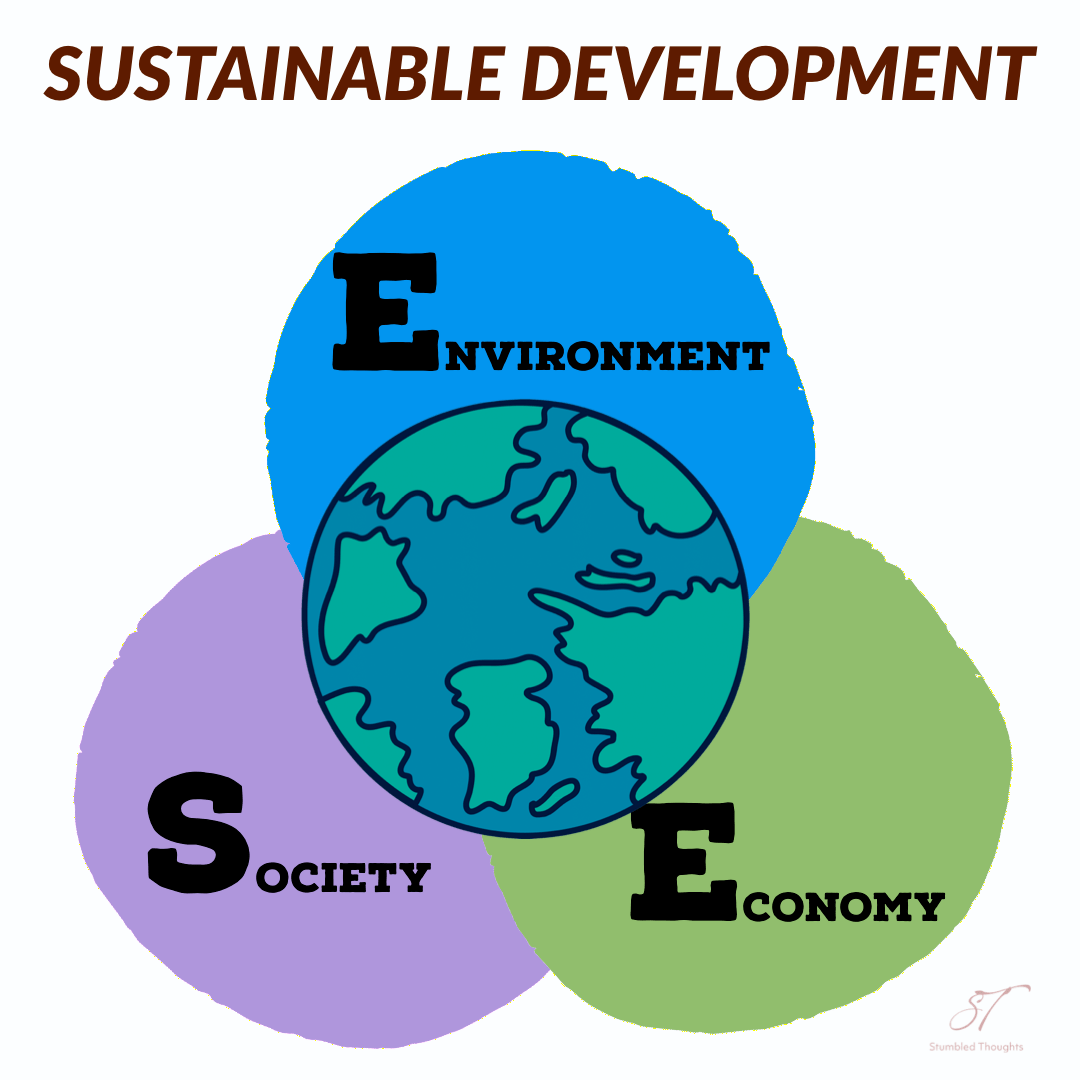
Sustainability is becoming a popular topic lately. It is gaining more recognition now since it is becoming evident that unless we adapt to more sustainable living, we cannot preserve our resources and quality of life for our generation and future generations.
What is Sustainability?
Sustainability is an integrated approach where a balance is maintained between economic growth, social equity and the environment. The United Nations Brundtland Commission defines sustainability as “meeting the needs of the present without compromising the ability of future generations to meet their own needs.”

Today many countries are still in the stage of development. Therefore, ensuring that their needs are met and their development process does not negatively impact future generations, is essential.
In 2015 United Nations member states adopted the 2030 agenda for Sustainable Development. This ‘agenda’ provides a blueprint for achieving peace and prosperity for the people and our planet.
With each year our planet getting warmer and natural disasters becoming more common, the need for a plan of action is becoming significant. While at the same time, we also need a strategy to achieve economic growth, end poverty, improve health and education and reduce inequality.
Environment, economy and society are the three components of sustainable development. It is all about using our resources wisely and conservatively, emphasising the long term impacts of the ways we use our resources now.
The question is how we can contribute and do our part as an individual, group or company? With our world extensive and diverse, how can we adapt it to a more local or individual context?
While I was researching how we can integrate sustainability in our life, work and community, I came across the United Nations 17 goals of the United Nations Sustainable Development Agenda. These global goals focus on the aspects that need our immediate attention to achieve sustainable growth. These goals are:
- Eliminate poverty
- End hunger, achieve food security and improved nutrition and promote sustainable agriculture.
- Health and well-being
- Clean water and sanitation
- Ensuring inclusive and quality education and promoting lifelong learning opportunities for all
- Gender equality
- Access to affordable and clean energy for everyone.
- Promoting sustainable economic growth, full and productive employment and decent work for all.
- Building resilient infrastructure, promoting inclusive and sustainable industrialisation and fostering innovation.
- Reduce inequality within and among countries.
- Sustainable cities and communities.
- Responsible consumption and production.
- Climate action.
- Conserve and sustainably use the oceans, seas and marine resources for sustainable development.
- Protect, restore and promote sustainable use of terrestrial ecosystems, sustainably manage forests, combat desertification, and halt and reverse land degradation and halt biodiversity loss.
- Promote peaceful and inclusive societies for sustainable development.
- Strengthen the means of implementation and revitalise the global partnership for sustainable development.
You can read about these goals in detail here
Why Do We Need To Adapt Sustainability?
The question, however, should be, why not? Sustainability has diversity of benefits that focuses on maintaining an ecological balance and ensuring that we achieve social and economic development. We cannot keep our quality of life, the diversity of life on Earth or our ecosystems unless we embrace sustainability. We need to realise that our resources are finite, and living sustainably is not something we ‘should’ do but something we ‘must’ do to conserve and protect all lives. Every small step counts, whether making wiser purchase decisions, growing our own food or simply reducing waste by reusing and recycling.
Just remember small steps can make bigger differences!
 Stumbled Thoughts